Home / Blog / Moroccan Breakfast: What Locals Eat in the Morning and Where to Try It in Marrakech
Food
Moroccan Breakfast: What Locals Eat in the Morning and Where to Try It in Marrakech
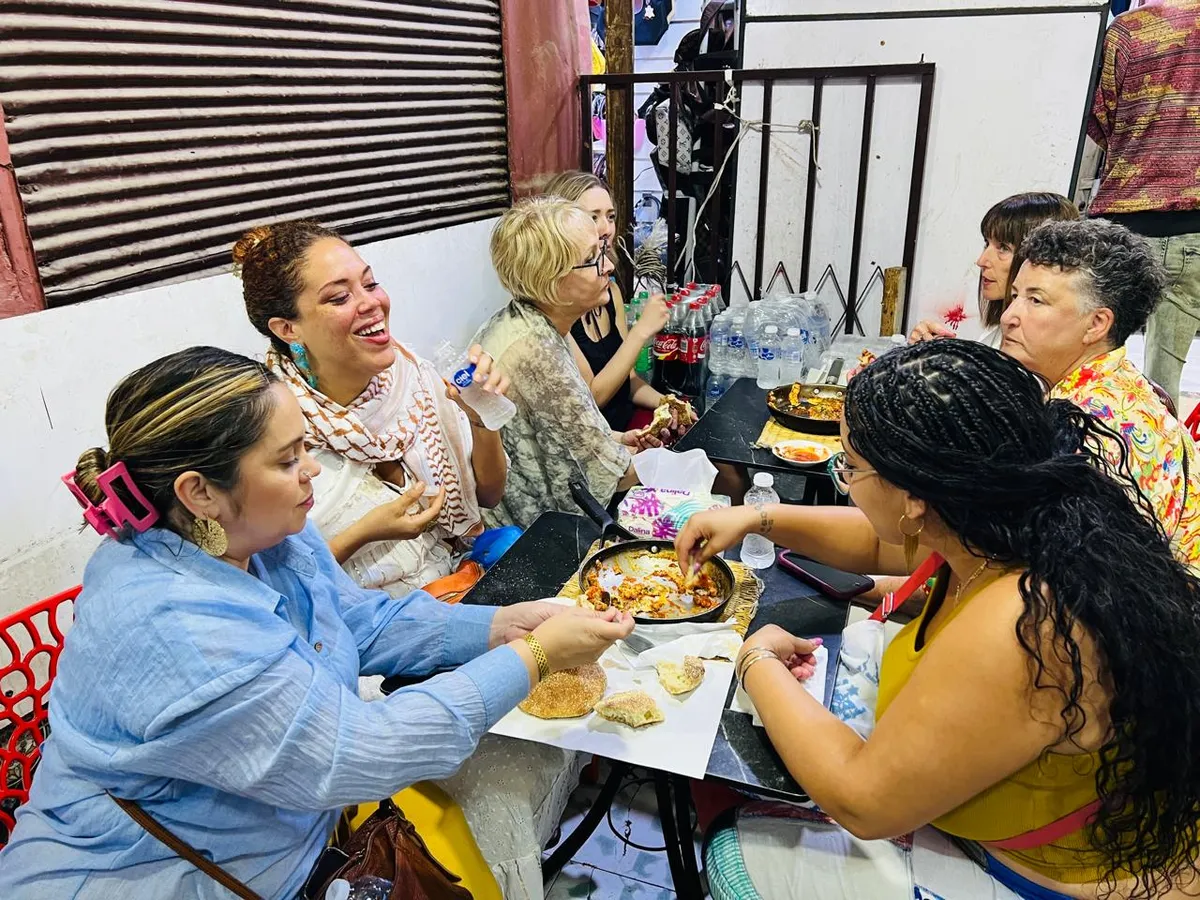
Forget the hotel buffet for a moment. If you want to understand how Moroccans start their day, look at what is on the table in a local home.
A typical Moroccan breakfast at home is mint tea with bread and olive oil, msemen (flaky pan-fried flatbread), harcha (semolina bread), bissara (a warm fava bean soup) or makla, a pan of eggs cooked in tomato sauce, a bit like shakshouka. You can taste a local breakfast spot on our Marrakech street food tour.
It is simple, warm and made to share: a pot of mint tea, fresh bread and a few dishes everyone eats from together. Here is what a real Moroccan breakfast looks like, and where you can try it in Marrakech.
What Moroccans eat for breakfast at home
In local houses, breakfast usually brings together a few of these:
Mint tea
Breakfast starts with a glass of Moroccan mint tea: green tea brewed with fresh mint and sugar, poured from high to make a little foam. Read our 8 facts about Moroccan mint tea.
Bread with olive oil
Fresh bread dipped in olive oil is the simplest and most common Moroccan breakfast. Bread is part of almost every Moroccan meal, and it is often used instead of a fork.
Msemen
Msemen is a square, flaky flatbread cooked in a pan. It is soft inside and a little crispy outside, and you can eat it plain, with honey or with butter.
Harcha
Harcha is a round semolina bread cooked in a pan. It is slightly crumbly and goes very well with tea.
Bissara
Bissara is a warm, thick soup made with dried fava beans, usually served with olive oil and cumin. It is a popular breakfast, especially when the mornings are cold.
Makla, the Moroccan shakshouka
Makla is a pan of eggs cooked in a tomato sauce, a bit like shakshouka. It comes to the table in the pan, and everyone eats it together with bread.
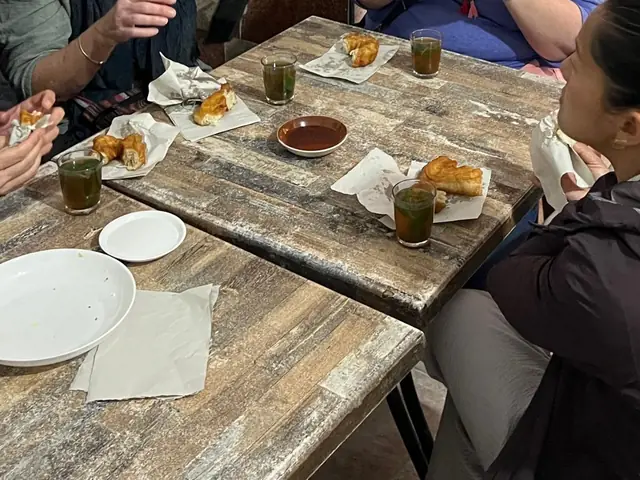
Our tip: Eat like a local: tear a piece of bread and use it to pick up the food, instead of a fork. Always use your right hand.
Where to try a local breakfast in Marrakech
Most riads serve a breakfast with some Moroccan dishes, often msemen, harcha, bread and tea. But if you want to eat where locals eat, small local spots in the Medina are the place to go.
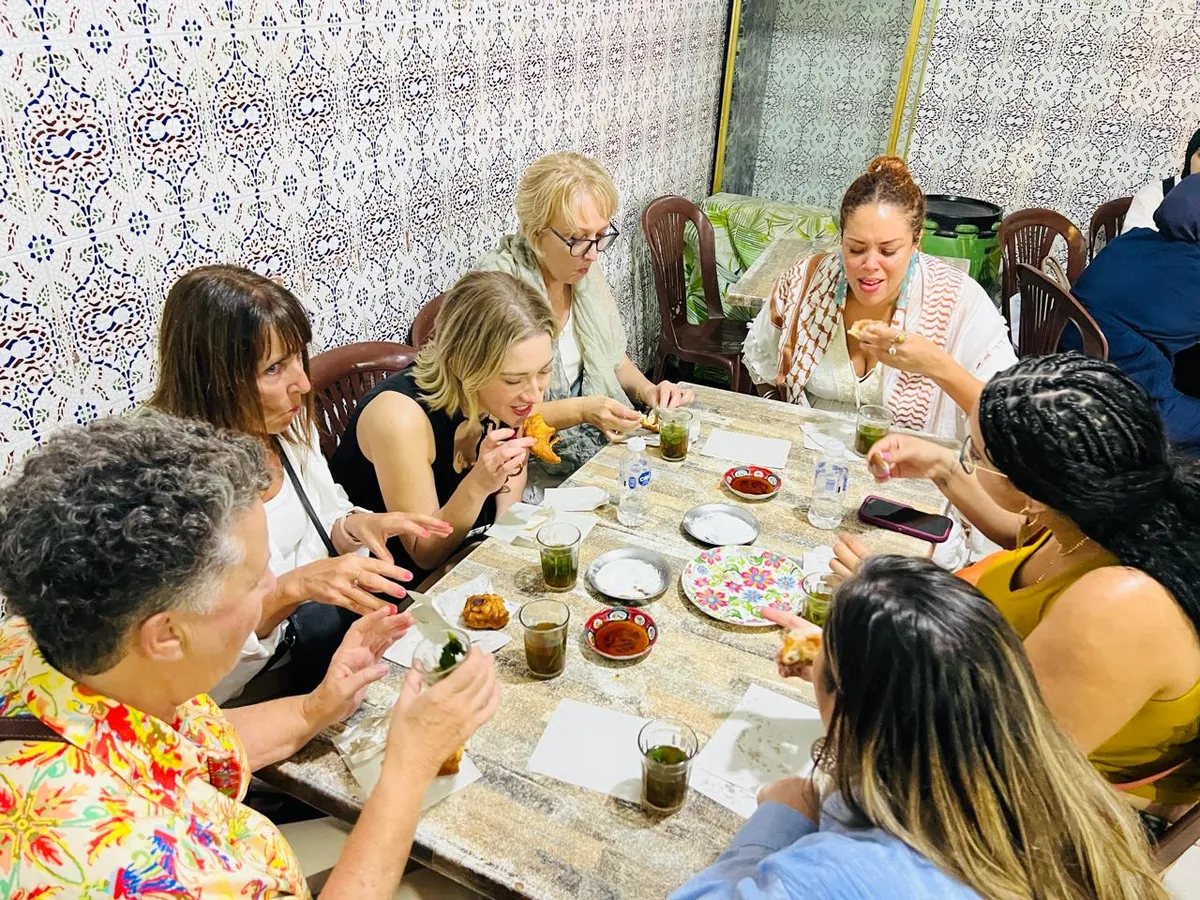
On our Marrakech Street Food Tour, one of the stops is a local breakfast place. You taste harira (Moroccan soup), msemen, mint tea and makla, the Moroccan shakshouka, shared at the table like a local family. This stop is part of both our tours, at 11:00am and 6:30pm, because Moroccans eat these dishes at any time of day.
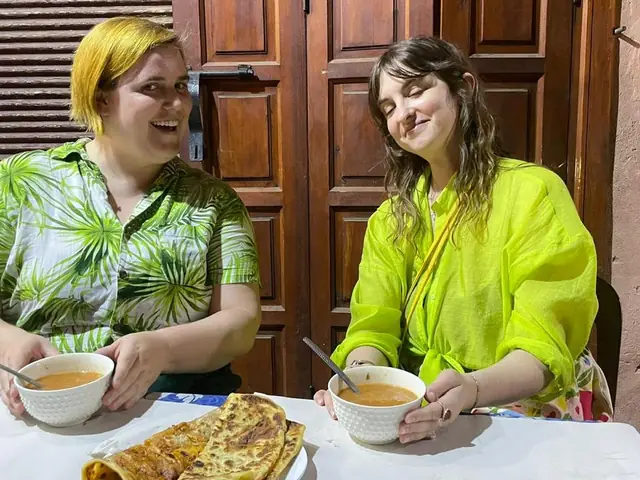
What is harira?
Harira is a Moroccan soup made with tomatoes, lentils, chickpeas and herbs. It is famous as the soup Moroccan families eat to break the fast during Ramadan, but you can find it all year round. Read more in our guide to Ramadan in Marrakech.
Breakfast in the desert and the mountains
On our day trips and Sahara tours, breakfast is included at every riad, kasbah hotel and desert camp. Waking up in the Sahara and having mint tea and fresh bread after watching the sunrise over the dunes is a moment many of our guests remember.
Is it good for vegetarians?
Yes, most of these dishes are vegetarian: bread, msemen, harcha, bissara and makla. If you have allergies or a special diet, tell us before the food tour, so we can plan the tastings around you.
Book your food tour in Marrakech
Frequently asked questions
What is a typical Moroccan breakfast?
Mint tea, bread with olive oil, msemen, harcha, bissara (fava bean soup) or makla, eggs cooked in tomato sauce like shakshouka.
What is msemen?
A square, flaky flatbread cooked in a pan, eaten plain or with honey or butter, usually with mint tea.
Where can I try a local Moroccan breakfast in Marrakech?
In small local spots in the Medina. Our street food tour includes a local breakfast stop with harira, msemen, mint tea and makla.
Is a Moroccan breakfast vegetarian?
Most dishes are: bread, msemen, harcha, bissara and makla.
Questions about your trip?
Send us your dates and what you would like to see, and we will reply with ideas and availability.