Home / Blog / 15 Best Things to Do in Marrakech: A Local Guide to the Red City
Marrakech
15 Best Things to Do in Marrakech: A Local Guide to the Red City
Marrakech is a city full of history, colours, architecture and everyday life. From the busy streets of the old Medina to beautiful gardens, traditional markets and historic palaces, there is always something interesting to experience.
But Marrakech is not just about visiting famous monuments. Some of its best experiences are found in the small details: watching local artisans at work, enjoying Moroccan tea on a rooftop, exploring hidden traditional workshops or finding places that many visitors walk past without knowing their history.
Having spent years living and working in Marrakech, we have selected 15 places and experiences we recommend to anyone visiting the city for the first time.
Here is our local guide to the best things to do in Marrakech.
1. Visit the Koutoubia Mosque and Its Gardens
The Koutoubia Mosque is one of the most recognisable landmarks in Marrakech. Built in the 12th century, its impressive minaret dominates the city skyline and can be seen from several parts of the Medina.
The mosque is an important religious site for local Muslims. Non-Muslim visitors cannot enter the mosque, but you can admire its beautiful architecture from outside and explore the surrounding gardens.
The gardens are a lovely place to take a break from the busy streets, enjoy the greenery and photograph one of Marrakech's most famous monuments.
Our tip: Visit around sunset when the light gives the minaret a beautiful warm colour. It is also a great starting point for exploring the Medina.
2. Experience Jemaa el-Fna Square by Day and Night
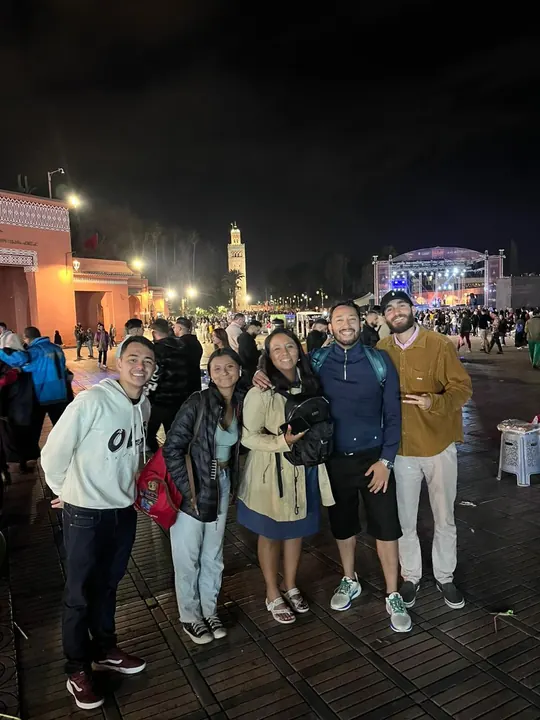
You cannot visit Marrakech without spending time in Jemaa el-Fna, the city's famous main square.
During the day, you will find fresh orange juice sellers, traditional food stalls, street performers, musicians and people going about their daily activities.
But when the sun goes down, the atmosphere changes completely. Food stalls appear, the smell of grilled meat fills the air, musicians perform and the square becomes one of the liveliest places in Morocco.
Our recommendation is to visit twice: once during the day and again in the evening. You will experience two very different sides of Marrakech.
Important local tip: If you want to photograph the snake charmers or monkeys in the square, expect to be asked for payment. This is part of how some performers make their living. Always agree on the price before taking a photograph. If you prefer not to interact with them, head to one of the rooftop cafés surrounding the square. You can enjoy a Moroccan tea, watch the activity from above and take beautiful photographs, especially at sunset.
3. Explore the Traditional Souks of Marrakech
The souks are among the most interesting places to explore in the Marrakech Medina.
These traditional markets are made up of small shops and workshops selling everything from leather bags and handmade shoes to carpets, lanterns, spices, ceramics and traditional clothing.
But what makes the souks special is not just the shopping. It is the opportunity to see traditional craftsmanship that has been passed down through generations.
We particularly recommend visiting:
- Souk Haddadine: The traditional metalworkers' market, where you can watch artisans working with metal to create lanterns, decorative pieces and other handmade objects.
- Souk Jeld: An area associated with leather goods, where you can find traditional leather products and see the importance of leather craftsmanship in Marrakech.
Take your time, look around and watch the artisans doing their work. You do not need to buy anything to enjoy the experience.
4. Visit Ben Youssef Madrasa
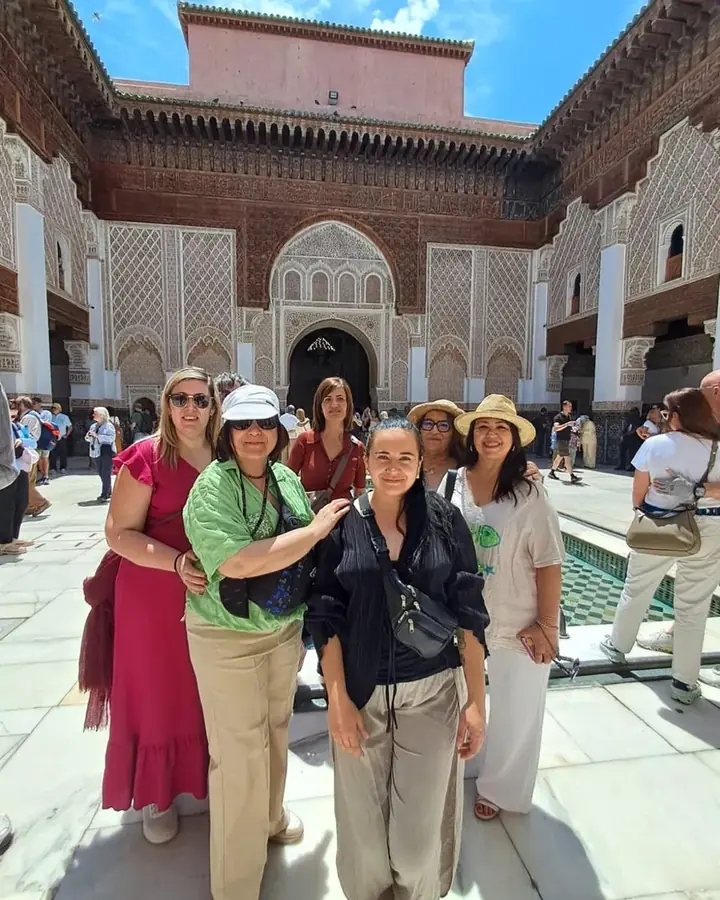
Ben Youssef Madrasa is one of the most impressive historical buildings in Marrakech.
This former Islamic school was once an important centre of religious education, where students came to study Islamic sciences and the Quran.
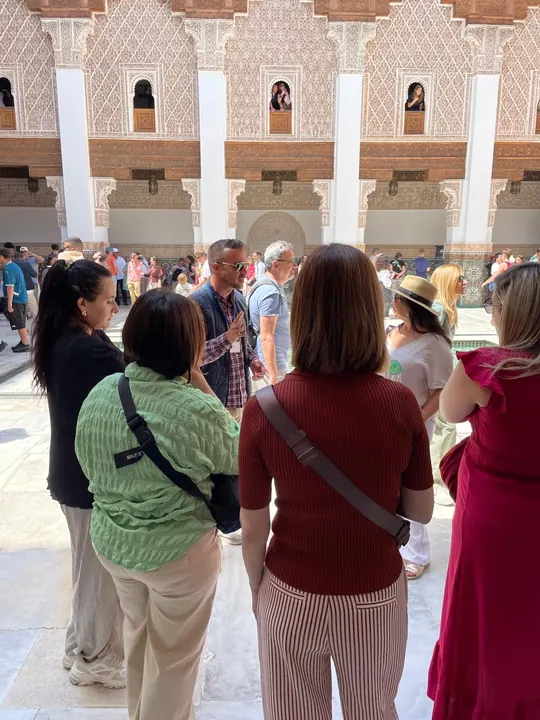
Today, visitors can explore its beautiful architecture, including its central courtyard, detailed geometric decorations, carved cedarwood, colourful tiles and traditional Moroccan plasterwork.
The level of craftsmanship is remarkable, and every corner has something interesting to admire.
Our tip: Take your time inside the courtyard and look closely at the details. It is one of the best places in Marrakech to appreciate traditional Moroccan architecture.
5. Visit Bahia Palace and El Badi Palace
If you enjoy history and architecture, two palaces deserve a place on your Marrakech itinerary.
Bahia Palace
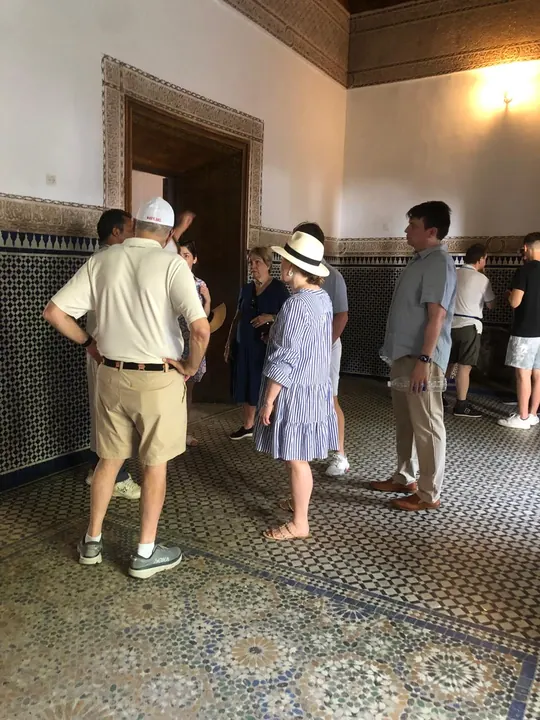
Built in the 19th century, Bahia Palace is famous for its beautiful courtyards, gardens, painted ceilings, marble floors and detailed Moroccan decorations.
It gives visitors an idea of the elegance and architectural style of Morocco's royal and wealthy households.
El Badi Palace
El Badi Palace offers a very different experience. Built in the 16th century, it was once an impressive royal palace. Today, visitors can explore its enormous courtyards, historic ruins and large open spaces.
Although much of the original decoration has disappeared, the scale of the palace gives you an idea of how impressive it once was.
Our tip: If you have enough time, visit both. They offer two different perspectives on Marrakech's history.
6. Explore the Mellah – The Old Jewish Quarter
The Mellah is the historic Jewish quarter of Marrakech, located close to Bahia Palace and the old royal district.
Walking through this neighbourhood gives you another perspective on the city's history and cultural heritage.
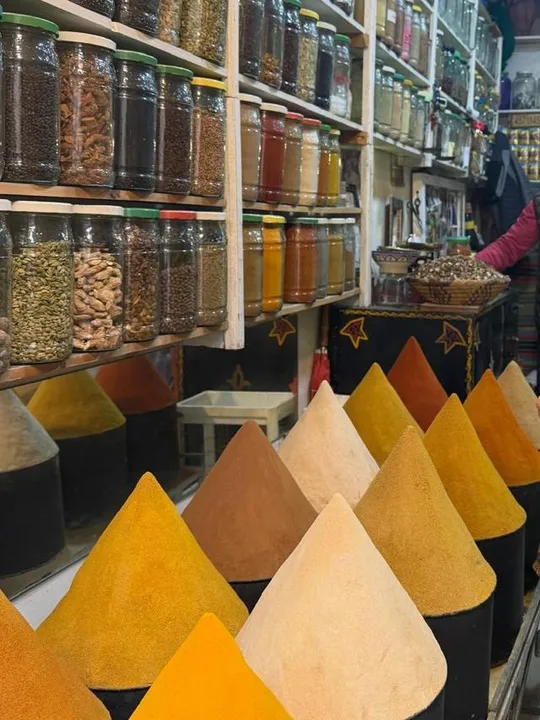
You can explore its narrow streets, local markets, small shops and traditional architecture. The area is also known for its spice market, where you will find colourful displays of herbs, spices and local products.
The Mellah is an interesting place to understand the different communities that have contributed to Marrakech over the centuries.
Our tip: Combine your visit with Bahia Palace and the surrounding historic neighbourhood to make the most of your time.
7. Visit the Saadian Tombs
The Saadian Tombs are among the most important historical sites in Marrakech.
Dating mainly from the Saadian dynasty, these royal burial chambers are famous for their beautiful decorations, intricate tilework, carved marble and impressive architectural details.
The tombs were rediscovered in the early 20th century after remaining hidden for centuries.
Although the site is relatively small compared with some of Marrakech's other monuments, its artistic details make it well worth visiting.
Our tip: Allow some time to admire the craftsmanship, especially the detailed decorations inside the main mausoleum.
8. See a Farnatchi – A Hidden Side of Traditional Marrakech
Here is something many visitors do not know about Marrakech.
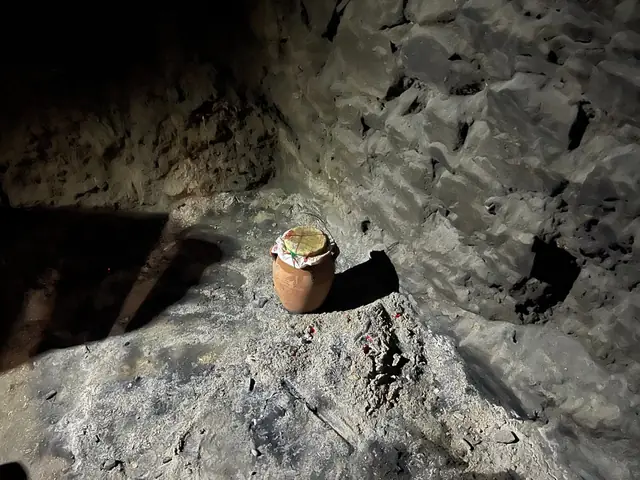
A Farnatchi is a traditional communal furnace that plays an important role in the everyday life of the Medina.
In traditional neighbourhoods, these furnaces are used to heat the water and spaces of nearby hammams. They are also associated with the preparation of Tangia, one of Marrakech's most famous traditional dishes.
Tangia is a slow-cooked meat dish prepared in a special clay pot, traditionally cooked in the warm ashes of a communal furnace.
It is an interesting example of how different parts of traditional Moroccan life are connected: food, neighbourhoods and the local hammam culture.
Our tip: If you have the opportunity to see a traditional Farnatchi, take it. It is a fascinating part of Marrakech's heritage that most visitors never get to experience.
9. Explore a Traditional Fondouk
Fondouks are historic buildings that played an important role in Marrakech's commercial life.
In the past, merchants, traders and travelling nomads used these buildings as places to stay, store their goods and keep their animals while visiting the city.
They were essentially a combination of accommodation, storage and trading spaces.
Today, some old fondouks have been transformed into small markets, workshops, shops and artisan spaces.
Walking through one of these buildings gives you an idea of how trade and travel worked in Marrakech centuries ago.
Our tip: Look beyond the shops and pay attention to the architecture, especially the central courtyards and traditional galleries.
10. Visit Dar el Bacha and Enjoy Bacha Coffee
Dar el Bacha is one of the most beautiful historic buildings in Marrakech.
Also known as the Museum of Confluences, this former palace is admired for its traditional Moroccan architecture, colourful zellige tiles, carved wooden doors and elegant courtyards.
Inside, you can explore different exhibitions and learn more about Moroccan and international cultural heritage.
The building is also home to the famous Bacha Coffee experience, where coffee lovers can enjoy a wide selection of coffees from different origins in a beautiful setting.
Our tip: If you enjoy coffee, this is a lovely place to take a break during your Medina visit. Allow extra time, as Bacha Coffee can be very popular.
11. Enjoy Moroccan Tea at 1112 Tea House
If you are a tea lover, make time to visit 1112 Tea House.
Moroccan tea culture is an important part of everyday life. Tea is more than just a drink; it is a way of welcoming guests, spending time with friends and enjoying a moment together.
A traditional Moroccan tea is usually prepared with green tea, fresh mint and sugar, although there are many variations.
A tea house is also a lovely place to slow down after walking through the busy Medina. Depending on the menu, you can enjoy lunch alongside your tea.
Our tip: Take your time and enjoy the experience. In Marrakech, tea is rarely something to rush.
12. Relax in Le Jardin Secret
Hidden inside the Medina, Le Jardin Secret is a beautiful place to escape the noise and activity of the souks.
This historic garden combines traditional Moroccan garden design with Islamic architecture and peaceful green spaces.
You can explore its different gardens, admire the water features and see the traditional irrigation systems that have played an important role in Moroccan architecture.
It is a lovely contrast to the busy streets just outside its doors.
Our tip: Visit when you need a little break from exploring the Medina. It is a peaceful place to enjoy a slower moment in the city.
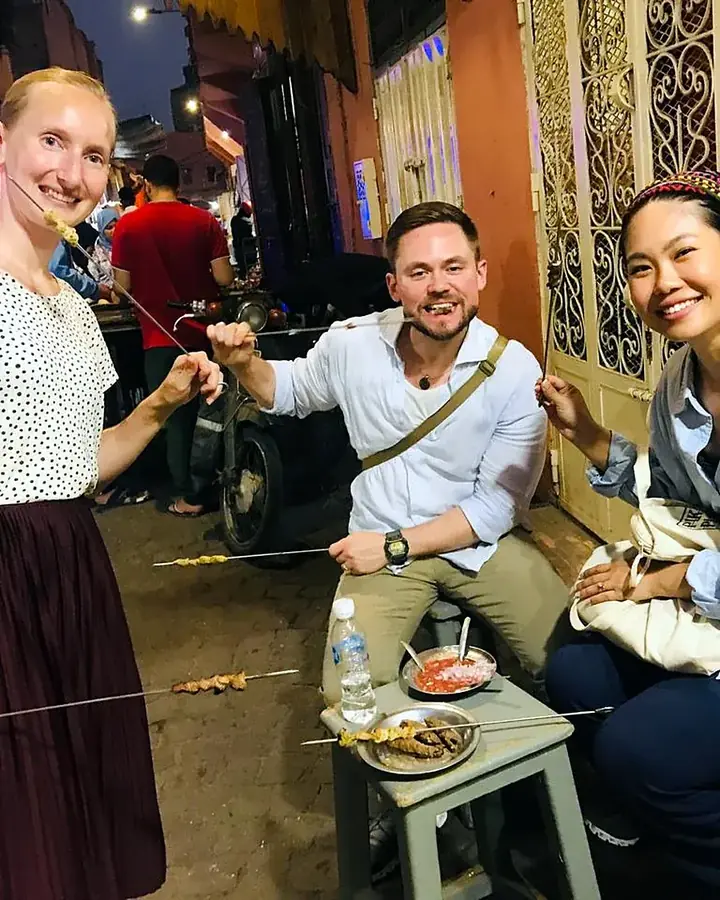
13. Explore Derb Dabachi and Its Street Food Stalls
If you want to experience everyday Moroccan food culture, make sure to visit Derb Dabachi.
This lively area of the Medina is particularly interesting in the evening, when small local food businesses and traditional street food stalls become busy.
You can find Moroccan sandwiches, grilled meat, traditional soups and other local specialities.
It is also a great area to experience the atmosphere of Marrakech beyond the main tourist restaurants.
Our tip: Visit in the evening when the food stalls are active. And if you want to try more than one local speciality, consider joining a guided Marrakech street food tour.
14. Visit Jardin Majorelle and the Yves Saint Laurent Museum
Jardin Majorelle is one of the most famous gardens in Marrakech.
Originally created by French painter Jacques Majorelle, the garden is known for its striking blue buildings, exotic plants, bamboo, cactus collections and peaceful pathways.
Its famous Majorelle Blue colour makes it one of the most photographed places in the city.
Just nearby, you will find the Yves Saint Laurent Museum, dedicated to the life and work of the famous French fashion designer, whose connection with Marrakech was particularly important.
You can combine the two visits if you enjoy gardens, art, fashion and design.
Our tip: Book your tickets in advance, especially during busy travel periods, as Jardin Majorelle is one of the most visited attractions in Marrakech.
15. Walk Through the Gardens of La Mamounia
La Mamounia is one of Marrakech's most famous luxury hotels, known for its beautiful architecture, elegant interiors and impressive gardens.
Even if you are not staying at the hotel, visiting its gardens can be a wonderful experience, subject to the hotel's visitor access arrangements.
The gardens feature beautiful greenery, palm trees, traditional Moroccan design and peaceful walking areas.
It is a lovely place to appreciate another side of Marrakech, away from the busy Medina streets.
Our tip: Check the hotel's current visitor policy before going, and consider enjoying a coffee or a drink if access arrangements allow.
Final Thoughts: Experience Marrakech Beyond the Tourist Attractions
Marrakech is a city that rewards curiosity. Of course, its famous palaces, gardens and historical monuments are worth visiting, but some of the most memorable moments happen when you take the time to explore beyond the main attractions.
Watch an artisan making a traditional lantern, enjoy a cup of mint tea, walk through the old fondouks, try the local food stalls or simply sit on a rooftop and watch the city come alive.
At Taste of Morocco Adventures, we believe that getting to know Marrakech means understanding its streets, traditions, food and people.
If you would like to explore the Medina with someone who knows its history, hidden corners and local food culture, join us on one of our private Marrakech city tours or our Marrakech street food experience.
Come and experience Marrakech beyond the usual tourist route.
Should You Take a Guided Tour on Your First Visit?
If you are visiting Marrakech for the first time, we recommend starting with a guided tour. The Medina is a maze of narrow streets, and a local guide gives you tips and orientation for the rest of your stay: how to find your way, where to eat, how to shop in the souks and which places are worth your time.
We offer two private city tours, for your group only:
- Half-day tour (about 4 hours): we visit two of the main sights and walk through the souks to hidden gems such as a traditional hammam and old fondouks. €120 per group. See the half-day tour.
- Full-day tour: we visit the main sights, including Bahia Palace, the Saadian Tombs and the Ben Youssef Madrasa, plus hidden gems along the way, with a lunch break in between. €160 per group. See the full-day tour.
Questions about your trip?
Send us your dates and what you would like to see, and we will reply with ideas and availability.