Home / Blog / Moroccan Mint Tea: 8 Interesting Facts Every Traveller Should Know
Food
Moroccan Mint Tea: 8 Interesting Facts Every Traveller Should Know
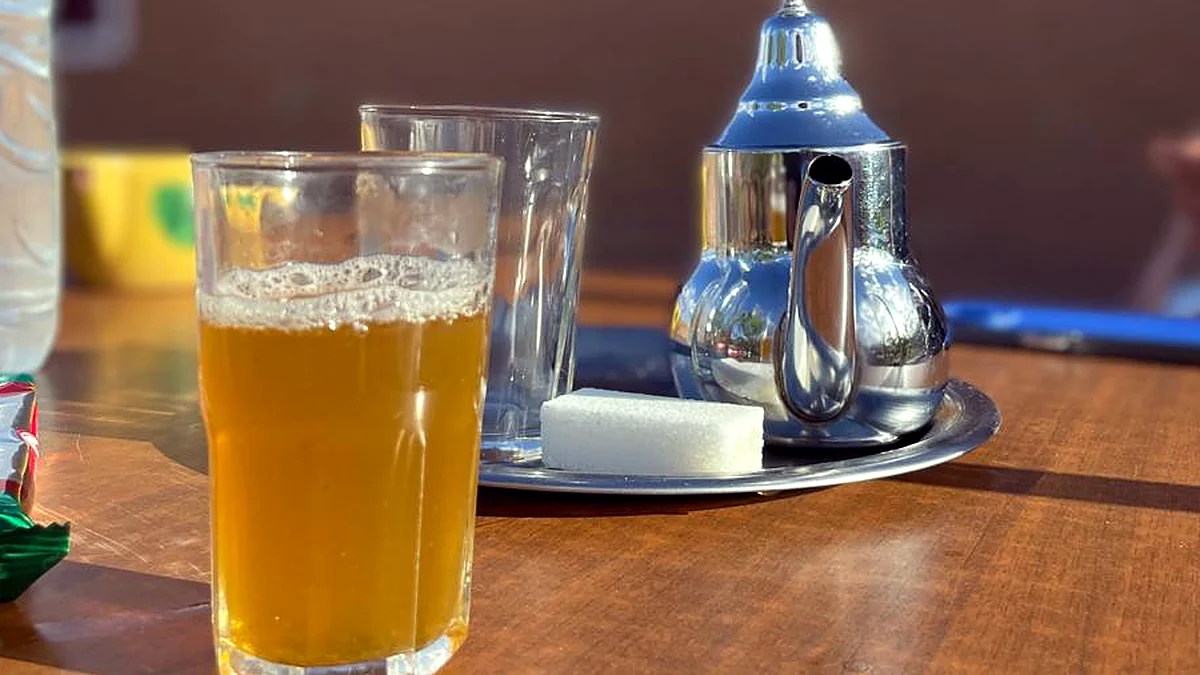
If you visit Morocco, there is one thing you will probably be offered almost everywhere: a glass of Moroccan mint tea.
Moroccan mint tea is green tea (usually gunpowder) brewed in a metal teapot with fresh mint and sugar, then poured from high to make a layer of foam. If you don't like it sweet, ask for "atay bla sokkar, afak" or for the sugar on the side.
Whether you are visiting someone's home, exploring the souks of Marrakech, enjoying a traditional meal, staying in a riad or spending a night in the Sahara Desert, mint tea is likely to be part of your experience.
For Moroccans, tea is much more than something to drink. It is a symbol of hospitality, a reason to sit together and an important part of everyday life.
But there are a few things about Moroccan mint tea that many visitors don't know. Here are some interesting facts to understand this popular Moroccan tradition.
1. Moroccan Mint Tea Is Actually Made with Green Tea
One of the first surprises for many tourists is discovering that Moroccan mint tea is not simply boiled mint leaves.
The traditional recipe starts with Chinese green tea, usually gunpowder green tea. Fresh mint leaves are added afterwards, together with sugar.
The combination creates the familiar refreshing taste that has become one of the symbols of Morocco.
The tea is generally prepared in a traditional metal teapot, where the green tea is brewed with hot water before the mint and sugar are added.
So, the next time someone offers you Moroccan mint tea, remember that the base is green tea, not just mint!
2. Traditional Moroccan Tea Is Usually Sweet
If you have ever tried mint tea in Morocco, you might have noticed that it can be quite sweet.
Sugar is traditionally added during preparation, and some households use quite generous amounts.
However, if you don't like sweet drinks, there is no problem. You can simply ask for tea with the sugar served separately.
You can say:
"Atay bla sokkar, afak" – Tea without sugar, please.
Or simply ask for the sugar on the side.
This way, you can enjoy the traditional flavour while choosing how much sugar you want.
3. Why Do Moroccans Pour Tea from So High?
You may have noticed something interesting when watching someone prepare Moroccan tea.
Instead of pouring directly into the glass, the person holding the teapot raises it quite high above the glass.
But why?
One reason is to create a layer of small white bubbles, known as the foam on top of the tea. It also helps mix the tea and gives it an elegant presentation.
In Moroccan culture, pouring tea is almost an art. Experienced tea makers can pour from quite a height without spilling a drop.
It is also a small gesture of pride and hospitality when serving guests.
4. The Foam Has a Special Story in the Desert
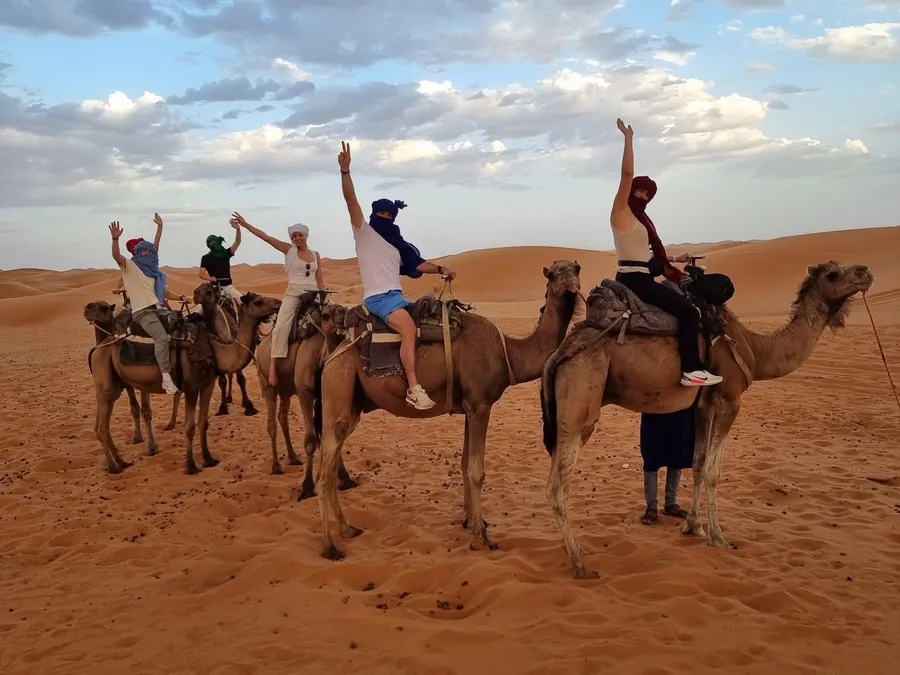
Tea traditions are particularly interesting when you travel through the Sahara Desert.
In desert communities, the foam on top of the tea is sometimes associated with a practical purpose.
Traditionally, people explain that the layer of foam helps protect the drink from dust or small particles that might fall into the glass in a sandy environment.
It is also part of the traditional way of presenting tea.
Today, the foam is mainly appreciated as part of the tea-making ritual and its presentation, but this old desert explanation is an interesting story to hear when sharing tea in the Sahara.
5. Moroccan Mint Tea Can Be Served at Any Time of the Day
In Morocco, there isn't really a specific time for drinking tea.
It can be served in the morning, after lunch, in the afternoon or in the evening.
When friends or family visit, preparing tea is often one of the first things people do.
It is also common to enjoy a glass of tea while chatting, discussing daily life or simply relaxing after a busy day.
For many Moroccan families, having tea together is part of their daily routine.
6. Tea Is Perfect with Traditional Moroccan Food
Moroccan mint tea is often enjoyed alongside different types of traditional food.
For example:
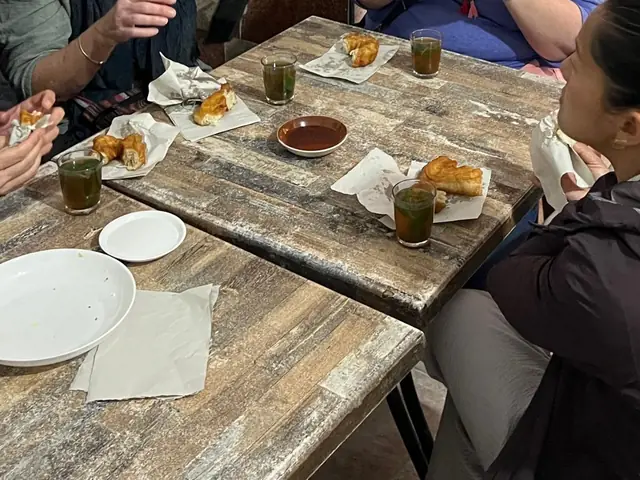
- Msemen: A traditional Moroccan square-shaped pancake, often served with honey, butter or olive oil.
- Harcha: A round semolina bread, usually enjoyed with butter, honey or cheese.
- Moroccan bread: Fresh bread served with olive oil, honey or other homemade accompaniments.
- Tagine: Some people enjoy a glass of mint tea after a traditional tagine meal.
Tea and freshly made msemen or harcha are particularly popular combinations for breakfast or afternoon snacks.
7. Some Moroccans Enjoy Tea After a Traditional Hammam
Another interesting part of Moroccan daily life is the traditional hammam.
After spending time in the warm steam, washing and relaxing, some people like to finish their experience with a glass of mint tea.
It is a nice way to sit down, relax and enjoy something refreshing after the bath.
In some places, tea is also served as part of the overall hammam experience.
8. Moroccan Mint Tea Is a Symbol of Hospitality
Perhaps the most important thing to understand about Moroccan mint tea is what it represents.
Offering tea to someone is a gesture of welcome and hospitality.
When you visit a Moroccan home, you may be offered tea even if you have only come for a short visit.
In the souks, you might be invited to sit down and share a glass while talking with a shopkeeper. In a riad, your arrival might be welcomed with a freshly prepared pot.
And in the desert, sharing tea is often an important moment around the camp.
It is not just about drinking something. It is about taking time, sitting together and sharing a moment.
Final Thoughts: Don't Leave Morocco Without Trying Mint Tea
Moroccan mint tea is one of those simple experiences that can tell you a lot about the country's culture.
From the green tea and fresh mint to the generous sugar, the high pouring technique and the tradition of sharing a glass with guests, every detail has its place.
So, when you travel around Morocco, don't just order a mint tea and drink it quickly.
Take a seat, enjoy the moment and perhaps have it with some freshly made msemen or harcha.
Sometimes, the simplest moments become the best memories of your trip.
Our experienceMarrakech Street Food Tour9+ tastings at small local spots in the medina, about 3 hours, morning or evening. From €45 per person.See the details →Our experiencePrivate 3-Day Sahara Desert TourMarrakech to the Merzouga dunes, with a night at a desert camp in the Sahara.See the details →Questions about your trip?
Send us your dates and what you would like to see, and we will reply with ideas and availability.