Home / Blog / Tagine vs Couscous: Morocco's Two Famous Dishes Explained
Food
Tagine vs Couscous: Morocco's Two Famous Dishes Explained
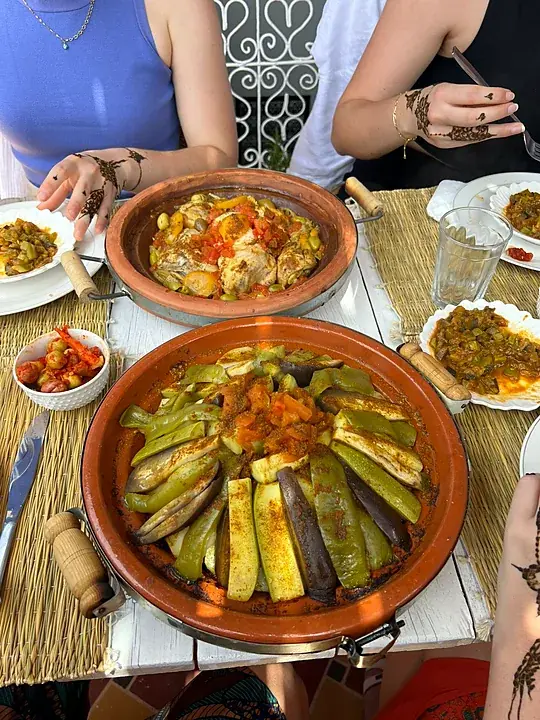
Tagine and couscous are the two dishes every visitor wants to try in Morocco. They are often mentioned together, but they are very different, in how they are cooked, how they are eaten and when Moroccans eat them.
A tagine is meat and vegetables slow-cooked in a clay pot with a conical lid, eaten with bread, and Moroccans can have it any day. Couscous is steamed semolina topped with vegetables and meat, usually eaten with a spoon, and it is the traditional Friday dish that brings families together.
Here is the simple explanation from our local team, and where to taste or cook both in Marrakech.
The quick difference
| Tagine | Couscous | |
|---|---|---|
| What it is | Meat and vegetables slow-cooked together | Steamed semolina with vegetables and meat on top |
| How you eat it | With bread, no fork needed | Usually with a spoon |
| When Moroccans eat it | Any day of the week | Mainly on Fridays |
What is a tagine?
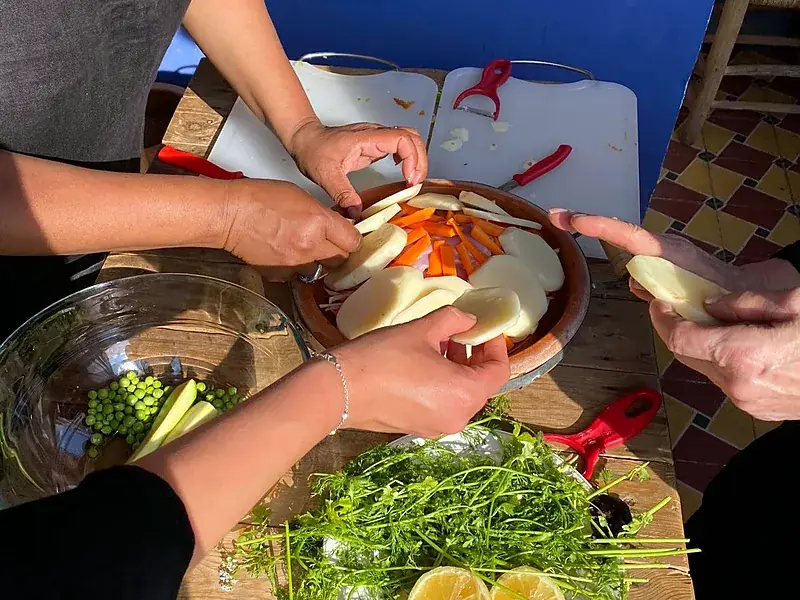
A tagine is both a dish and the clay pot it is cooked in, with its famous conical lid. Inside, meat and vegetables cook slowly together with Moroccan spices until they are soft and full of flavour.
In Morocco, a tagine is eaten with bread. Everyone shares from the same pot, tearing a piece of bread and using it to pick up the meat and vegetables. Tagine is everyday food: Moroccans can have it any day of the week.
There are many different tagines. In our cooking class, guests make a chicken tagine with vegetables. And if you ask Lhoussaine, our founder, his favourite is lamb tagine.
Our tip: Moroccan food is flavourful rather than spicy. Spices such as cumin, ginger, turmeric, paprika, cinnamon and saffron add flavour, and harissa, the hot chilli paste, is usually served on the side.
What is couscous?
Couscous is made from semolina, steamed until light and fluffy, then served with vegetables and meat on top. It is usually eaten with a spoon.
Couscous is the Friday dish in Morocco. It brings families together, and it is usually served after the Friday prayer. If you want to try it like a local, go to a local restaurant on a Friday, such as Restaurant Tiznit in Marrakech.
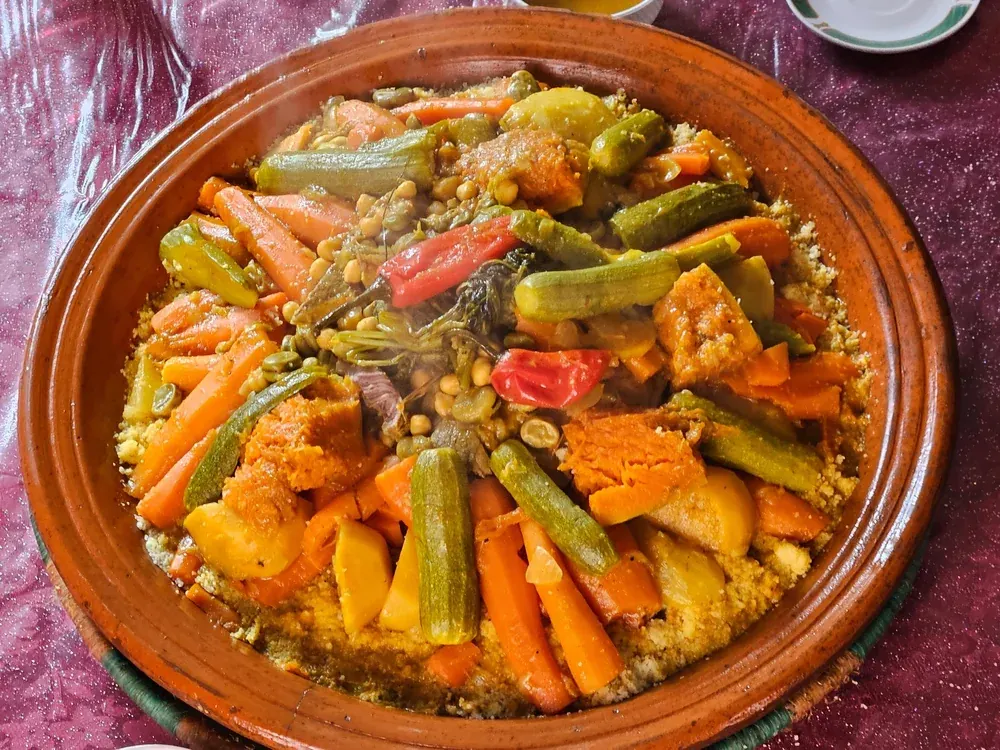
Which one should you try?
Both! Here is our advice:
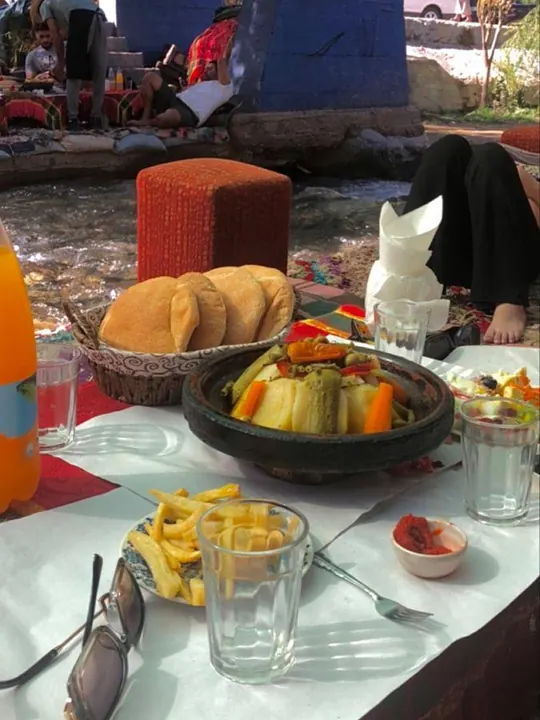
- Try a tagine at lunch on a day trip, for example by the river in the Ourika Valley, or cook one yourself in our cooking class.
- Try couscous on a Friday, when Moroccan families eat it.
- Both dishes have vegetarian versions, with vegetables only. Couscous contains gluten, so tell us if you have a special diet.
Cook a tagine in Marrakech
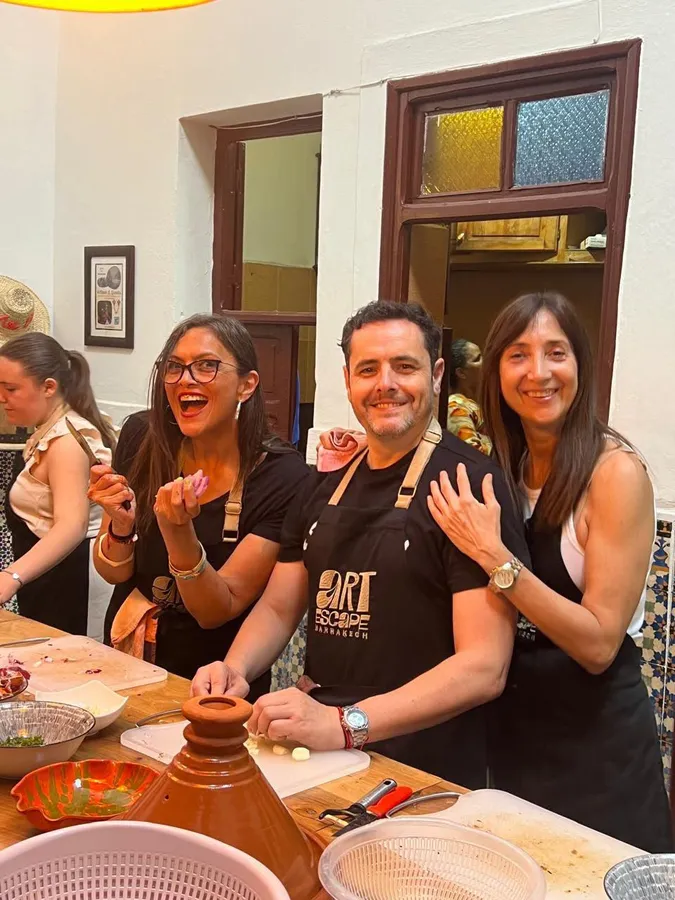
In our Moroccan cooking class, a local chef shows you how to prepare Moroccan starters, a tagine or couscous and a dessert, and then you sit down to enjoy the meal you made. The morning class usually includes a visit to the local market.
Our experienceMarrakech Cooking Class3 hours with a local chef in a riad, at 10am or 6pm. From €50 per person.See the details →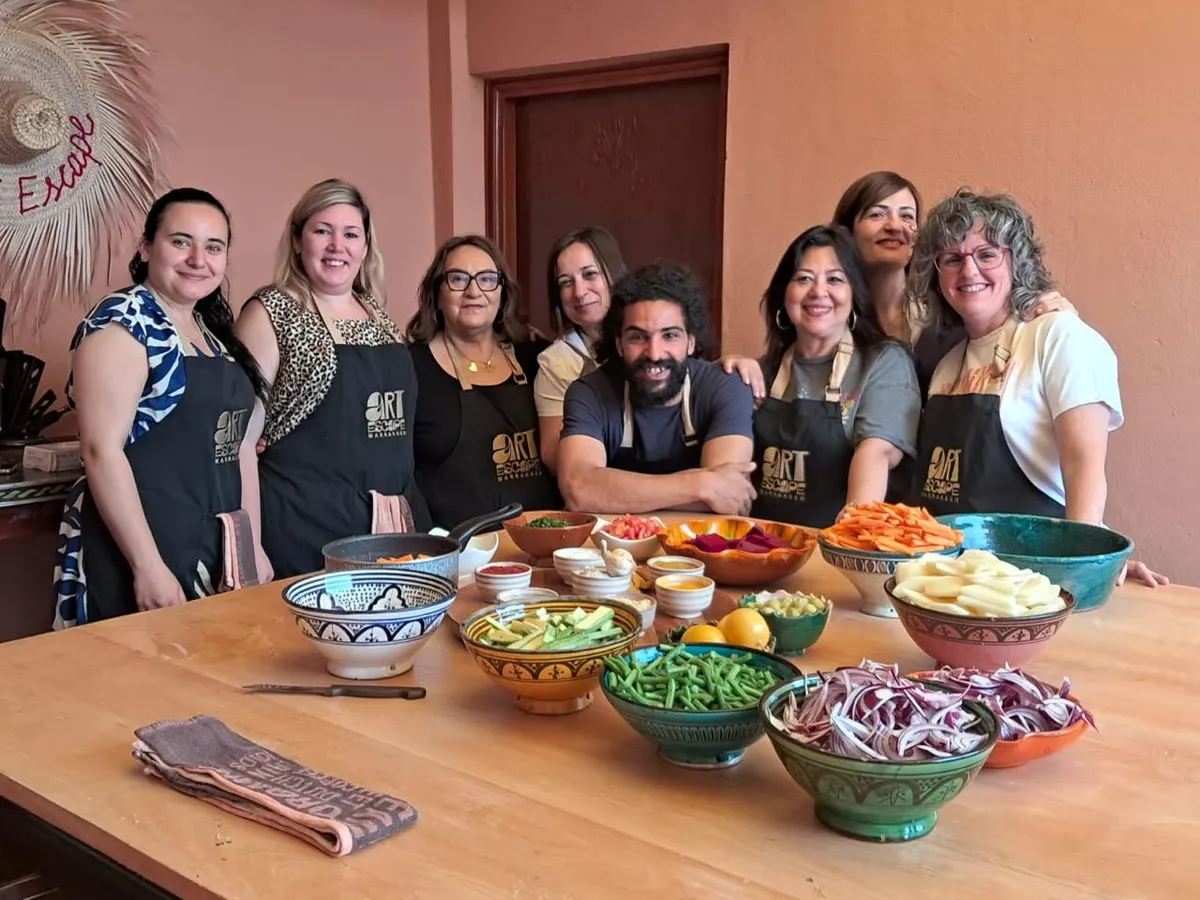
Other Moroccan dishes to try
Once you have tried tagine and couscous, look for tangia, the slow-cooked Marrakech speciality, pastilla, a sweet and savoury pastry, and harira soup. On our street food tour, you taste 9 or more local dishes in the Medina. Read our list of 15 Moroccan street foods to try.
Frequently asked questions
What is the difference between tagine and couscous?
A tagine is meat and vegetables slow-cooked in a clay pot and eaten with bread. Couscous is steamed semolina with vegetables and meat on top, usually eaten with a spoon.
Why do Moroccans eat couscous on Friday?
Couscous is the traditional Friday dish. It brings families together and is usually served after the Friday prayer.
Do you eat tagine with a fork?
Moroccans usually eat tagine with bread, using a piece of bread to pick up the food.
Can I learn to cook a tagine in Marrakech?
Yes. In our cooking class, you prepare a chicken tagine with vegetables with a local chef.
Questions about your trip?
Send us your dates and what you would like to see, and we will reply with ideas and availability.