Home / Blog / Moroccan Currency: Everything Tourists Need to Know About Money in Morocco
Planning
Moroccan Currency: Everything Tourists Need to Know About Money in Morocco
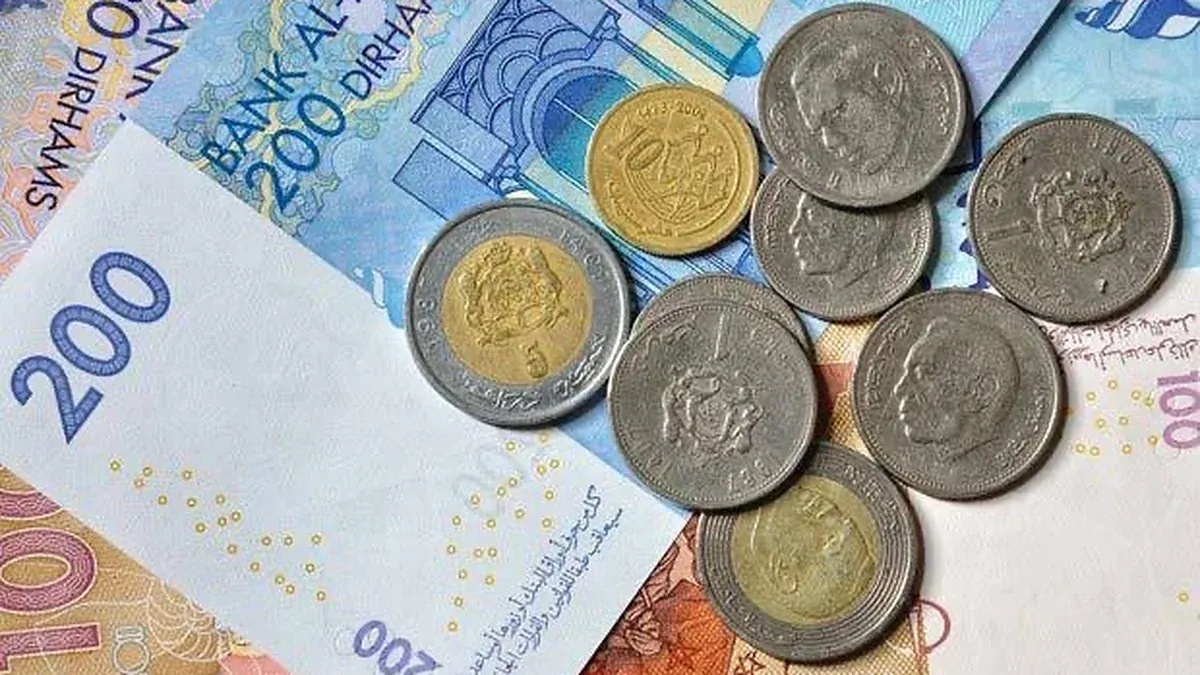
If you're planning a trip to Morocco, one of the first things you'll need to understand is the local currency and how payments work.
Morocco is still a country where cash plays an important role in everyday life. While credit and debit cards are becoming increasingly common, especially in larger restaurants, hotels and shops, you'll still need cash for many everyday purchases.
Whether you're visiting Marrakech, exploring the souks, enjoying local street food or travelling around the country, here is everything you need to know about Moroccan money.
1. What currency does Morocco use?
Morocco uses the Moroccan Dirham, commonly written as MAD or DH.
- MAD is the international currency code for Moroccan Dirham.
- DH is the abbreviation you'll often see on price tags, menus and in local shops.
For example:
- 10 DH = 10 Moroccan Dirhams
- 100 DH = 100 Moroccan Dirhams
- 1,000 DH = 1,000 Moroccan Dirhams
When shopping or paying for services, don't be confused if you see prices written in DH rather than MAD. They refer to exactly the same currency.
2. Where is the best place to exchange money in Morocco?
You can exchange euros, US dollars, British pounds and other major currencies into Moroccan Dirhams.
There are several options, but not all offer the same exchange rates.
At the airport
You can exchange money at the airport when you arrive. This is convenient if you need some cash immediately for your taxi, food or other small expenses.
However, for larger amounts, I recommend waiting until you reach the city, as exchange offices often offer better rates.
At exchange offices
Exchange offices are generally a good option for exchanging larger amounts of money. You can find them in the main tourist areas of Moroccan cities.
In Marrakech, one of the best-known places to exchange money is:
Hotel Ali – Jemaa el-Fna Square, Marrakech
Located right next to Marrakech's famous main square, Hotel Ali is a popular exchange location among tourists. It's a convenient place to exchange money while exploring the Medina.
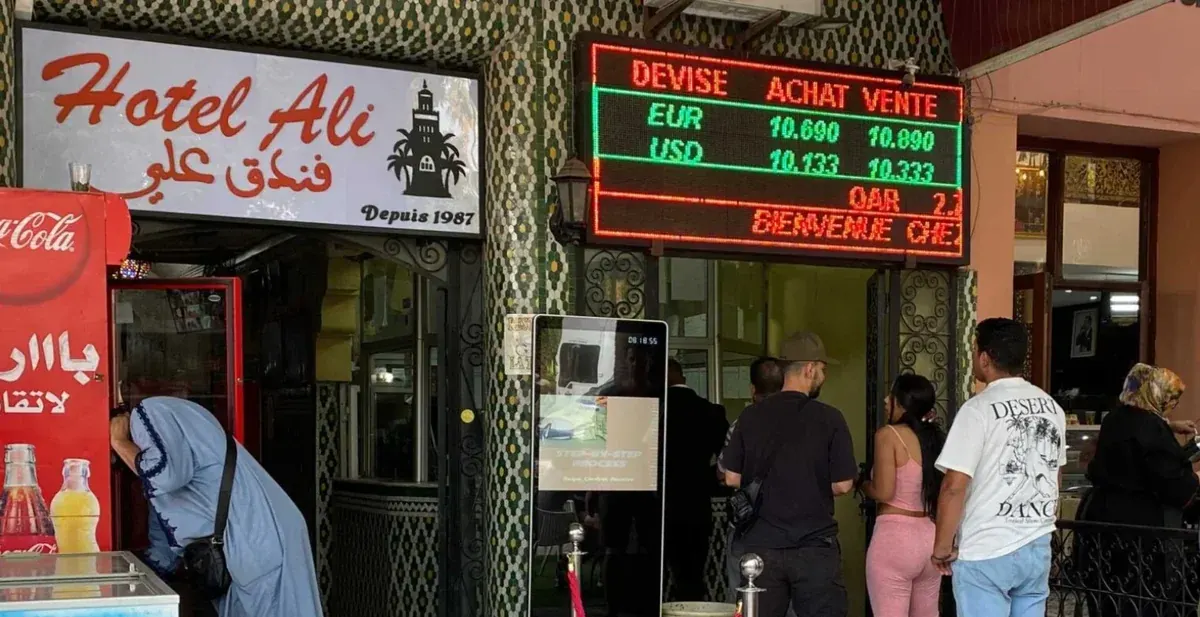
Our tip: Always check the exchange rate displayed before completing your transaction.
3. Should you carry cash or use a credit card in Morocco?
Cash is still king in Morocco!
Although card payments are becoming more common, particularly in larger restaurants, hotels, modern shops and bigger businesses, many small local places still accept cash only.
For example:
- Small cafés and local restaurants
- Street-food stalls
- Souks and traditional markets
- Small shops
- Local taxis
- Small neighbourhood businesses
Our tip: Always have some Moroccan Dirhams with you. You can use your bank card in places that accept it, but don't rely entirely on card payments.
4. Can you withdraw money from ATMs in Morocco?
Yes! You can use international bank cards to withdraw Moroccan Dirhams from ATMs throughout the country.
ATMs are widely available in Marrakech and other major Moroccan cities.
One option I recommend is Barid Bank ATMs.
Remember to check your own bank's international withdrawal fees and the ATM's charges before confirming a transaction.
5. Can you pay in euros or US dollars in Morocco?
In some tourist areas, hotels, shops and restaurants may accept euros, and occasionally US dollars.
However, I wouldn't recommend paying in foreign currencies regularly.
For example, some businesses may calculate the exchange rate at approximately:
€1 = 10 Moroccan Dirhams
This can be less favourable than exchanging your money at an exchange office.
If you plan to spend a lot of money during your holiday, it's better to exchange your euros or dollars into Moroccan Dirhams.
6. How much money should you bring to Morocco?
This depends on several things:
- How many days you're staying.
- Whether you're travelling independently or with organised tours.
- How much shopping you plan to do.
- Whether you prefer restaurants or local street food.
- Your accommodation and transport arrangements.
Overall, Morocco is not a particularly expensive destination compared with many European countries.
With a reasonable budget and a little bargaining when shopping in the souks, you can enjoy a wonderful holiday without spending too much.
7. What should you do with leftover Moroccan Dirhams?
If you have Moroccan Dirhams left at the end of your holiday, you don't necessarily need to spend everything before leaving.
You can exchange your remaining Dirhams back into euros, US dollars or another accepted foreign currency before departing.
It's a good idea to keep your exchange receipts, as you may be asked to show them when exchanging leftover currency.
Final tips: Money in Morocco
Here are my main recommendations for handling money during your Moroccan holiday:
1. Remember that MAD and DH both refer to Moroccan Dirhams.
2. Exchange a small amount at the airport for your immediate expenses.
3. Use exchange offices for larger amounts. In Marrakech, Hotel Ali at Jemaa el-Fna is a popular option.
4. Carry cash because many small local businesses don't accept cards.
5. Use ATMs when needed, and consider Barid Bank.
6. Avoid paying in euros regularly because the exchange rate offered by businesses may not be favourable.
7. Don't worry too much about your budget. Morocco can be very affordable with a little planning and bargaining.
Enjoy your trip to Morocco!
Our experienceMarrakech Street Food TourPut your dirhams to good use: 9+ local tastings in the Medina with a local guide, about 3 hours. €45 per person.See the details →Questions about your trip?
Send us your dates and what you would like to see, and we will reply with ideas and availability.